
A Journey Through Mountains, Memory, and Ink
Last week, I shared that I’m embarking on a new quest: gathering Virginia landscape reference photos to inspire a fresh series of artwork. This past weekend, that journey took me to the western part of the state—specifically to Blacksburg, Virginia, a four-hour drive from my home. While the main reason for the trip wasn’t photography, I knew I couldn’t pass up the opportunity to scout some meaningful reference material while I was there.
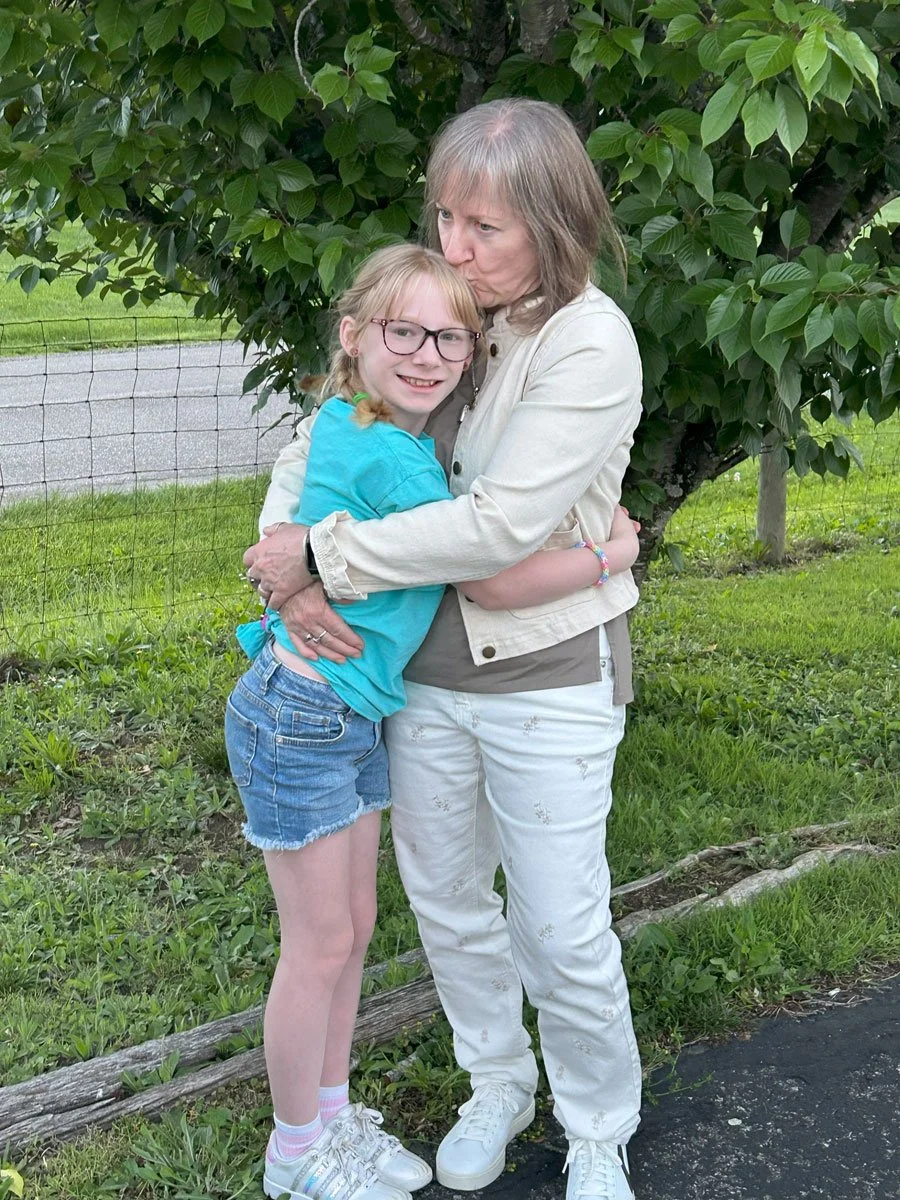
The real purpose of the trip was far more personal and joyful—my granddaughter’s 10th birthday. I don’t get to see her very often, usually just once or twice a year when her family comes east. But ten feels like such a significant birthday. It marks a shift—still a child, but on the cusp of something new. I decided to surprise her by showing up at her party, and the look on her face when she saw me was absolutely worth the drive. We had a lovely time together, full of laughter, games, and the kind of simple joy that only children can conjure so effortlessly. I wouldn’t have missed it for the world.
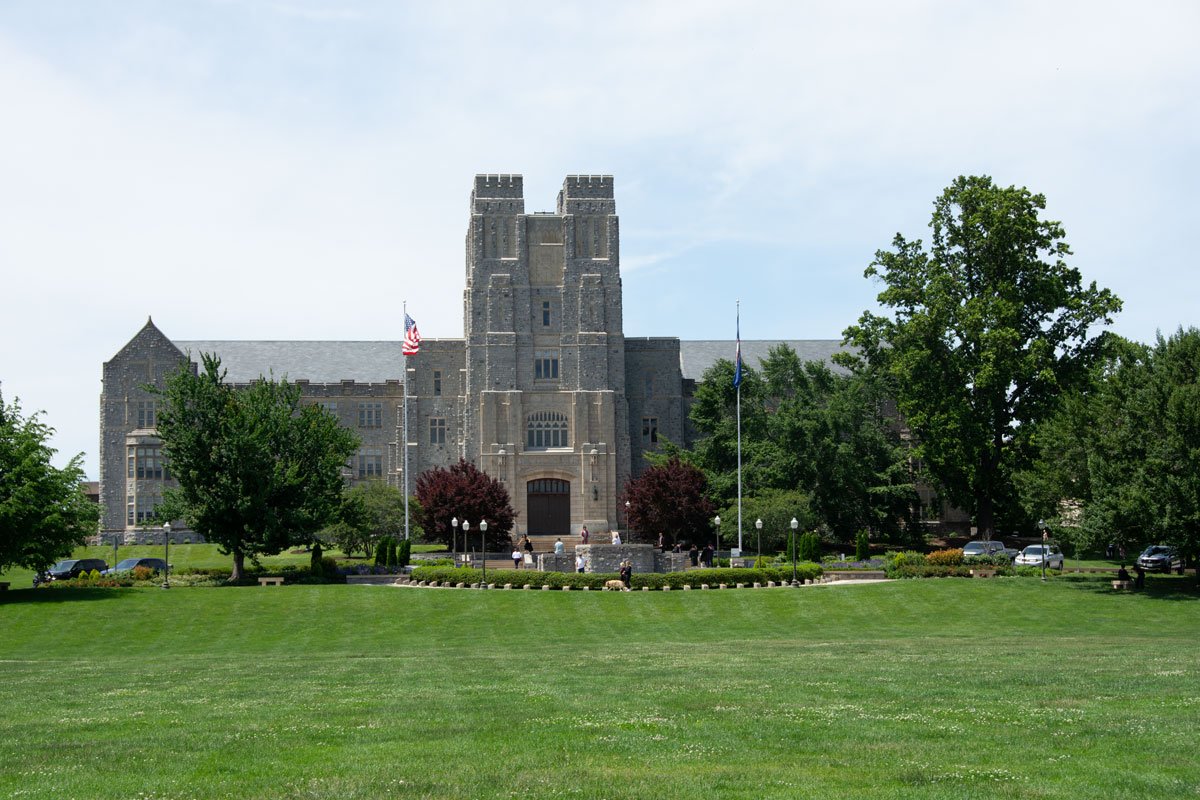
Of course, I brought my camera with me. I always do when I travel, especially now that I’m more intentionally seeking out landscapes. Blacksburg is home to Virginia Tech, a world-renowned university with a sprawling and beautiful campus. I was especially drawn to Burruss Hall, one of the most iconic and architecturally striking buildings at Virginia Tech. Although countless photographs and pieces of art already feature this landmark, I felt a strong pull to create a landscape where Burruss Hall exists not as the central subject, but as part of a broader story—blending into the surrounding natural beauty of the area.
I’m excited about two or three of the photos I captured there. The light, the angles, and the cloud formations—oh, the clouds!—really gave me something to work with. I can already begin to imagine how these references might evolve into finished ink pieces, where the architecture is gently embraced by sky, tree, and earth. I’ve never been on Tech’s campus before, and I have to say, it’s an incredible place—nestled in the mountains, full of open space and old stone buildings. The timing worked out, too. It was the day after graduation, so while there were still a few clusters of proud families snapping pictures of students in cap and gown, the campus was quiet enough to explore without too many interruptions. Yes, there are people in some of my photos, but they’ll vanish in the artwork—they're there for light reference, not inclusion.
Because of time constraints back home, this was a whirlwind trip. I had to resist the strong temptation to wander farther afield with my camera, knowing how rich the region is in scenic vistas and historical resonance. The mountains that rise and fall all around you in that part of the state make it feel like a different world entirely—one I could have spent days exploring.
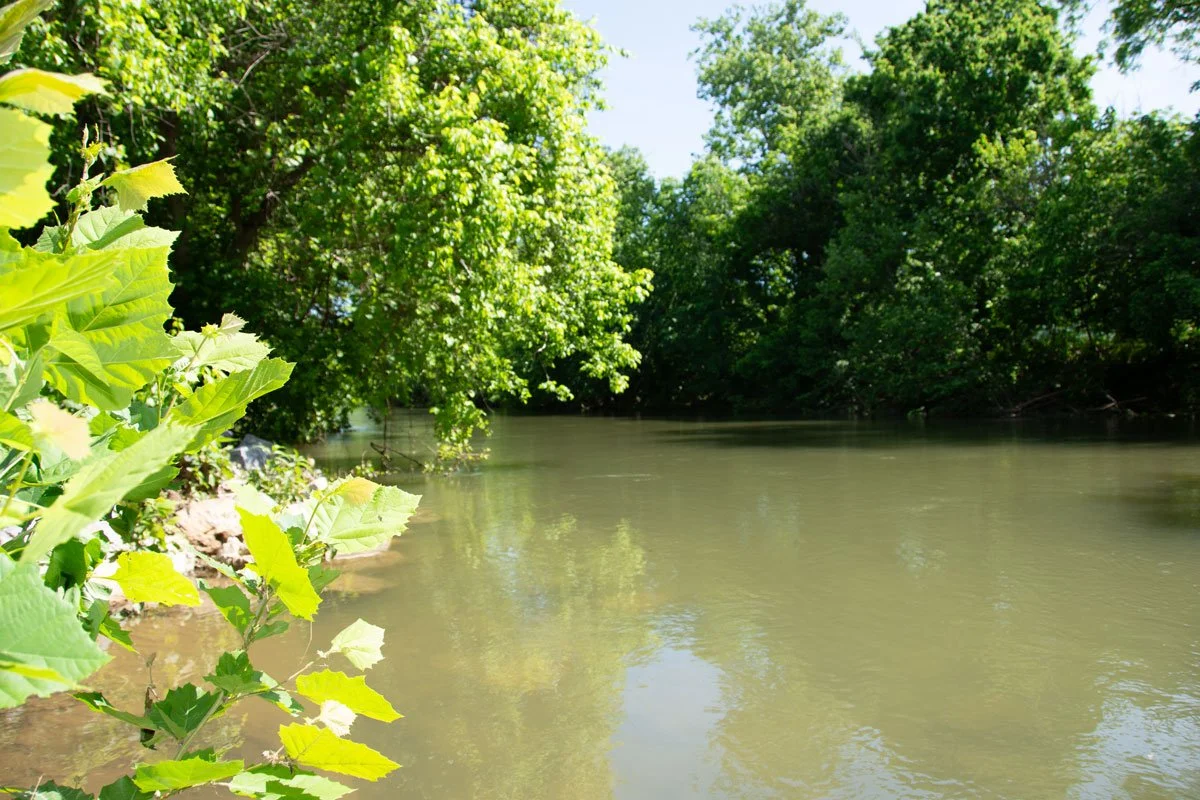
On the drive back, I made a spontaneous stop when I noticed the Roanoke River winding right alongside the road. There was a small pull-off area, and I couldn’t resist. I snapped a few quick photos of the river and the lush vegetation along its edge. It may or may not translate into a finished piece—I often find that certain scenes remain “just a photo” without ever taking on a new life through ink. Still, the patterns of water and the way the plants leaned toward the current caught my attention. Even if it doesn’t become part of this new series, it might one day emerge in another form. Or perhaps it will simply be a gentle river scene with universal appeal—something quiet and grounding.
One final stop marked another highlight of the journey for me: the national battlefield park at Appomattox Court House. I’ve long wanted to visit but had never made it a priority until now. Given this new landscape project—and the deeper exploration of Virginia’s layers of history—it felt like the perfect time. I wasn't going to miss it this time, especially with the park just a short detour from my route.
Appomattox is the site where the Civil War officially ended, and the village has been carefully preserved, with a mix of original buildings and meticulous restorations. As I walked the grounds, absorbing the exhibits and reading the historical plaques, I realized how much I didn’t know about the final days of the war. Being from the North, the Civil War didn’t feature as prominently in my school history lessons as it likely did for those raised in the South. This visit offered me a more intimate understanding—personal and emotional—of the events and people who shaped this chapter of our country’s story.
It was there, standing on that sacred ground, that I captured my favorite photo of the entire trip. The image shows the McLean House, where the surrender was completed, framed by open fields, old fences, and a winding road that draws the eye back into the landscape. The trees on either side created a natural frame, and again, the clouds gave the entire scene a quiet majesty. I can already envision this as the first piece I’ll begin in the new series—something about the way it all came together felt meant to be.
Interestingly, as I wandered through Appomattox and recalled other battlefields I’ve walked—Petersburg, Richmond, Manassas—I noticed something surprising: I felt a deep sense of peace. This always catches me off guard, especially since I tend to be sensitive to the emotional energy of places. You might expect sorrow or unease in places that saw so much suffering, but instead, I feel calm. Settled. Held.
The only way I can explain it is that the Earth herself has taken in all that pain and transmuted it—holding it gently, healing it, honoring it. These places stand as memorials, not only to the dead but to the complexity of the human spirit—the courage, the sorrow, the hope, and the mistakes. And in some way, by walking these grounds and remembering, we are participating in that honoring.
As I reflect on this quick trip—intended for celebration but shaped equally by inspiration and contemplation—I’m grateful. Grateful for my granddaughter’s smile. Grateful for the breathtaking beauty of the mountains. Grateful for unexpected river stops and historic buildings. Grateful for the Earth’s quiet, constant work of holding history and transforming it.
This new series of landscapes is just beginning, but it already feels like something much more than ink on paper. It feels like a conversation—with place, with memory, with healing. I can’t wait to see where it leads.