
Letting the Symbols Speak: A Journey into Meaningful Ink
When I first began trying to create hand-drawn art, I was honestly overwhelmed. I didn’t have formal training or years of experience behind me—just a deep pull to make something with my own hands that felt meaningful. The blank page was intimidating. So rather than focusing solely on creating a “pretty” picture, I started designing images that carried symbolic meaning. That intention gave me a place to start. Each element I added had a reason to be there—each line, shape, and form was chosen not just for aesthetics, but for the story it could tell without words.
This method of using symbols to imbue an image with deeper meaning is hardly something I invented. It’s part of a rich and ancient tradition, stretching back thousands of years. The earliest known examples of symbolic expression are the markings left behind by our distant ancestors—those mysterious scratches on cave walls dating back over 30,000 years. We don’t know exactly what they meant, but we know they meant something. Those symbols are the first recorded forms of communication, a visual language created out of necessity, reverence, or maybe just the simple desire to connect with others across time.
A few millennia later, the Egyptians developed their intricate system of hieroglyphics—symbols layered with meaning, still recognizable today. Some of those same symbolic motifs have persisted, morphing and evolving but still showing up in modern artwork. And throughout history, artists have used symbolism to navigate the constraints of their time. Early Christians, for example, used secret symbols to express their beliefs in times of persecution, embedding ideas and philosophies in their art in ways that were subtle, but powerful.
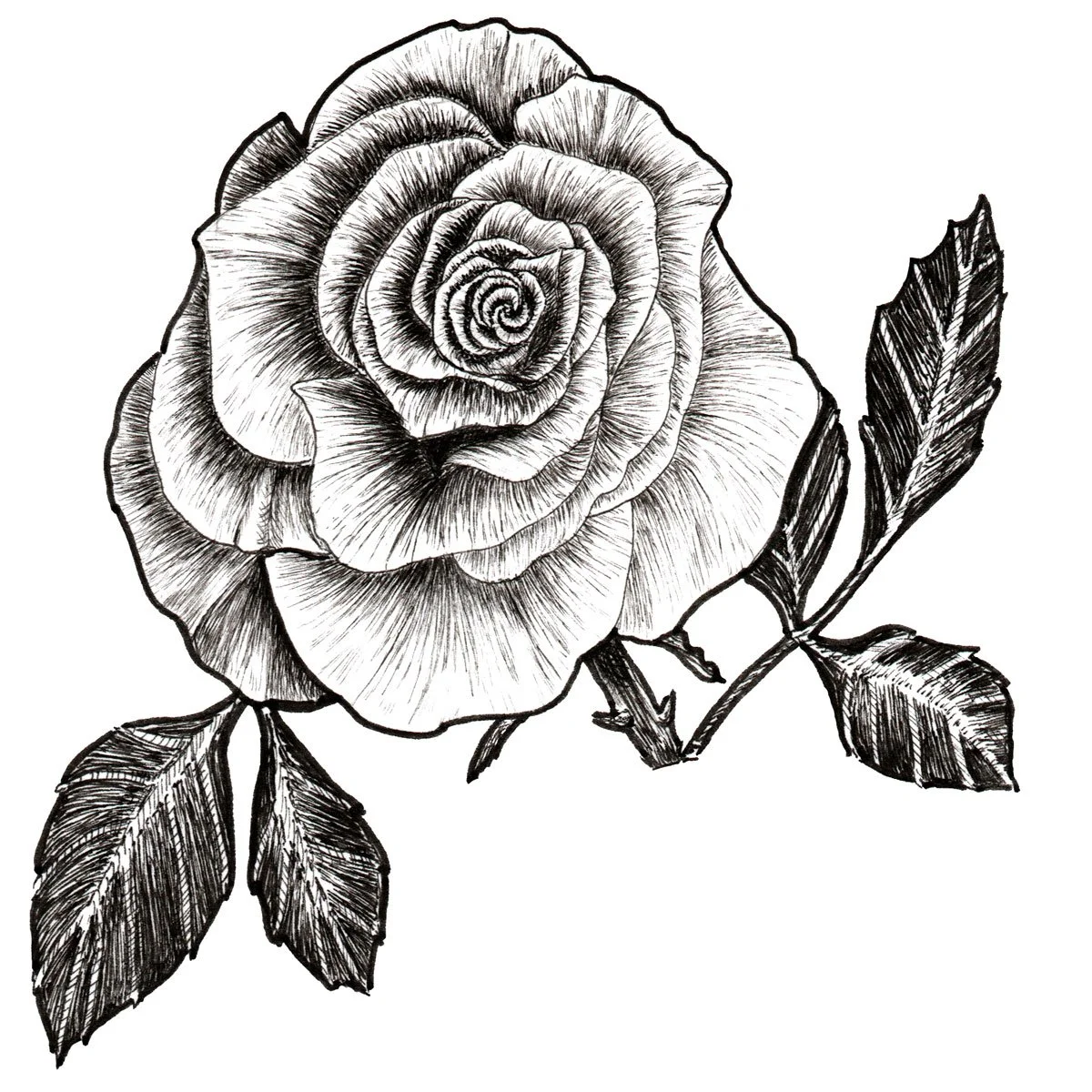
Even today, symbolic language is alive and well. Modern artists continue to embed symbols in their work to communicate views on spirituality, identity, justice, and the state of the world. The power of a symbol lies in its ability to mean something deeply personal while still being recognizable in a shared, almost archetypal way. Symbols transcend spoken language. They bypass the intellect and speak directly to something older and quieter inside us.
Over time, as I’ve grown more comfortable with my own artistic voice, I’ve become more and more drawn to the symbolic potential of flora and birds. These are the subjects I return to again and again in my ink work—not just because they’re beautiful (though they absolutely are), but because they carry an emotional and spiritual resonance that has been recognized for centuries. Each flower, each bird, holds its own story—its own vibration, if you will.
The language of flowers, known as floriography, is one of the most well-known systems of symbolic meaning. During the Victorian era, flowers were carefully chosen and arranged to convey messages that couldn’t be spoken aloud. A bouquet wasn’t just decorative—it was a form of communication, full of coded intentions. Today, many of those meanings still hold. A violet for loyalty. A marigold for grief. A daisy for innocence. It’s a beautiful tradition, and one I draw from often, though I tend to combine it with other sources.
My own use of symbolism is more metaphysical than social. I’m drawn to the idea that everything—every living thing, every object, every color and shape—has its own vibration. According to metaphysical traditions, things with similar frequencies resonate with each other. So if a red rose vibrates with the frequency of love, including that rose in a piece of art may help carry that energy outward. I choose elements based on their resonance, on their ability to embody an intention and hold that energy in the form of an image.
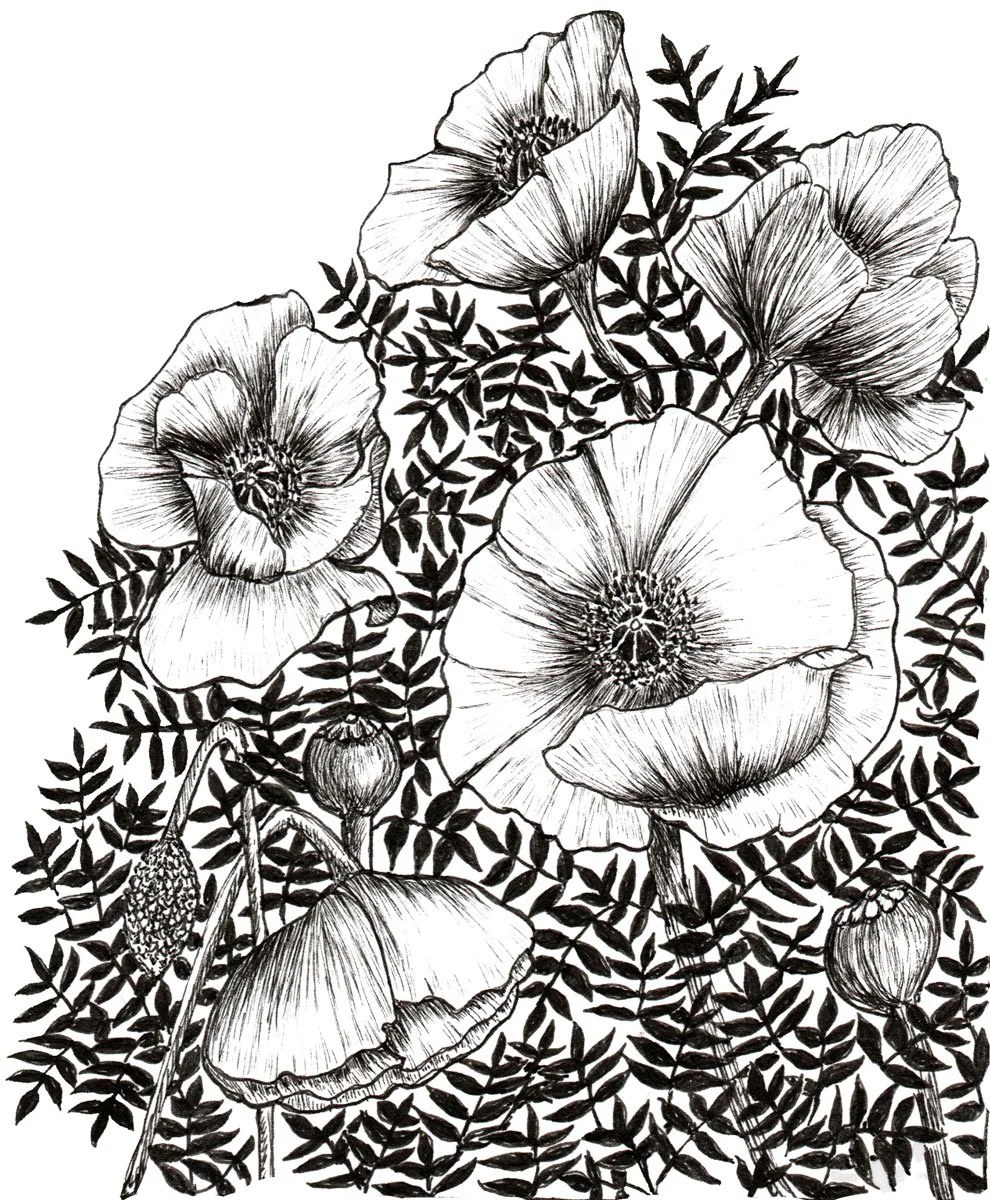
When I sit down to create a piece, I’m not just drawing a bird or a flower. I’m selecting symbols that together will shape a quiet prayer, a soft blessing for whoever may eventually receive it. I might use ancient medicinal knowledge, old folktales, metaphysical associations, or even just a gut feeling to decide which elements belong in a piece. Sometimes I know exactly what the image wants to say before I begin. Other times, the intention emerges slowly as the drawing unfolds, like a whisper growing louder with every stroke of the pen.
There was a time when I felt the need to explain each choice. To spell out why a particular flower symbolized protection, or what a certain bird had historically meant to the cultures who honored it. I wanted people to understand what I had put into the art—why it was more than just an image. But lately, I’ve let that go. Not completely, but enough to shift my approach. These days, I no longer feel the need to lay everything bare. I still include little hints in my descriptions, gentle nudges toward the piece’s energy or intention. But I’m no longer trying to convince anyone of anything. I trust that if someone is drawn to a piece, it’s for a reason. The right artwork finds the right person, even if they don’t consciously understand why.
That change didn’t happen overnight. It took a lot of soul searching to stop leading with explanations. It felt, at first, like I was abandoning something important—but really, I was making space for something more honest. I realized that the work doesn’t need me to speak for it. It speaks for itself, to those who are listening. Letting go of the urge to define every detail has also helped me become more comfortable sharing my work. It’s still scary—terrifying, even—to put something so personal into the world and let it stand on its own. But it feels right. It feels true to the way I create.
Now, when someone is drawn to a piece I’ve made, I smile and let them experience it in their own way. I don’t worry so much about whether they “get it” the same way I do. Maybe the blessing I poured into the ink will resonate with something in them. Maybe it will comfort or inspire or simply delight. Or maybe it won’t. Either way, the work has done its part. It has entered the world with intention, carrying something ancient and real—something symbolic, yes, but also entirely alive.